

NACIS Logo

Home | Annual Meeting | Community | Join NACIS | Cartographic Perspectives


Home > Cartographic Perspectives


Number 58, Fall 2007Number 58, Fall 2007

  • A Publishing History of John Mitchell's Map of North America, 1755-1775, Matthew H. Edney
  • The Role of Color Saturation in Maps for Children, Bill Buckingham and Mark Harrower
  • Historical Atlas of Oklahoma, Reviewed by Mary L. Johnson
  • Historical Atlas of U.S. Presidential Elections 1788-2004, Reviewed by Edith Scarletto
  • disORIENTATION, Reviewed by Denis Wood
  • Expansion of the Osher Map Library and Smith Center for Cartographic Education at the University of Southern Maine, Yolanda Theunissen
  • Color Design for the Color Vision Impaired, Bernhard Jenny and Nathaniel Vaughn Kelso
  • The Process of Map Design: Equal Cartographic Voice, Michael Hermann

Number 57, Spring 2007Number 57, Spring 2007

  • A Response to Denis Wood, Mark Denil
  • The Many Uses of Maps: The Producer at the Center, Joel Kovarsky
  • Introducing Plan Oblique Relief, Bernhard Jenny and Tom Patterson
  • Judgments of Size Change Trends in Static and Animated Graduated Circle Displays, John C. Kostelnick, J. Devin Land and James F. Juola
  • Designing Better Maps: A Guide for GIS Users; Making Maps: A Visual Guide to Map Design for GIS, Reviewed by George McCleary
  • The Atlas of North American English: Phonetics, Phonology and Sound Change. A Multimedia Reference Tool, Reviewed by Russell S. Kirby
  • Chicago: A Geography of the City and Its Region, Reviewed by Russell S. Kirby
  • Permissions, A Survival Guide: Blunt Talk about Art as Intellectual Property, Reviewed by Mary L. Johnson
  • The Cartographic Apprentice: By the End of this Assignment: Someone Will be Fired, Alison Feeney
  • NACIS map survey - looking at the results, Tom Patterson, Martin Gamache, Mike Hermann, and Alex Tait
  • Atlas of Yellowstone  Preliminary Work, W. Andrew Marcus, James E. Meacham, Ann Rodman and Alethea Steingisser

top

Number 56, Winter 2007Number 56, Winter 2007

  • timeline_33seconds (2006), Lilla LoCurto and William Outcault
  • A Map Is an Image Proclaiming Its Objective Neutrality: A Response to Mark Denil, Denis Wood
  • Visualizing Method-Produced Uncertainty in Isometric Mapping, Mathew A. Dooley and Stephen J. Lavin
  • Visual Representations of the Spatial Relationship Between Bermuda High Strengths and Hurricane Tracks, Jason T. Knowles and Michael Leitner
  • Field Methods in Remote Sensing, Reviewed by Jenny Hewson
  • Remote Sensing for GIS Managers, Reviewed by Daniel G. Cole
  • Literature, Mapping, and the Politics of Space in Early Modern Britain, Reviewed by Brooks C. Pearson
  • Maps as Mediated Seeing: Fundamentals of Cartography, Reviewed by Mary L. Johnson
  • Seeing Through Maps: Many Ways to See the World, Reviewed by Mary L. Johnson
  • Achieving Historical Map Effects with Modern GIS, Aileen Buckley, David Barnes, and Jaynya Richards
  • Some Things Lilla LoCurto and William Outcault Have to Say About Maps, Denis Wood

Number 55, Fall 2006Number 55, Fall 2006

  • Denis Wood's article "Map Art", Mark Denil
  • Reaction to Mark Denil, Ren Vasiliev
  • A Day With Norman J. W. Thrower, Judith Tyner
  • The Effectiveness of Interactive Maps in Secondary Historical Geography Education, Whitney Taylor and Brandon Plewe
  • A Multi-scale, Multipurpose GIS Data Model to Add Named Features of the Natural Landscape to Maps, Aileen Buckley and Charlie Frye
  • Views of the Rivers: Representing Streamflow of the Greater Yellowstone Ecosystem, Erik Strandhagen, W. Andrew Marcus, and James E. Meacham
  • The Gay and Lesbian Atlas, Reviewed by Mark Harrower
  • The Commerce of Cartography: Making and Marketing Maps in Eighteenth-Century France and England, Reviewed by Judith A. Tyner
  • Plotting the Globe: Stories of Meridians, Parallels, and the International Date Line, Reviewed by Fritz Kessler
  • A Railroad Atlas of the United States in 1946, Volume 2, New York & New England, Reviewed by Gordon Kennedy
  • What is Unique About the Imagery of mapformation?, Derek Tonn

Number 54, Spring 2006Number 54, Spring 2006

  • "False Truths": Ethics and Mapping as a Profession, Tom Koch
  • Supporting Map-based Geocollaboration Through Natural Interfaces to Large-Screen Displays, Alan MacEachren, Guoray Cai, Issac Brown, and Jin Chen
  • Non-Photorealistic Rendering and Terrain Representation, Patrick J. Kennelly and A. Jon Kimerling
  • From Afghanistan to Iraq in Media Maps: Journalistic Construction of Geographic Knowledge, Robert R. Churchill and E. Hope Stege
  • Shape Types for Labeling Natural Polygon Features with Maplex, Charlie Frye
  • Applied Environmental Economics: A GIS Approach to Cost-Benefit Analysis, Reviewed by Grace Wong
  • Maps and the Internet, Reviewed by Daniel G. Cole

Number 53, Winter 2006Number 53, Winter 2006

  • Art and Mapping: An Introduction, Denis Cosgrove
  • Map Art, Denis Wood
  • Interpreting Map Art with a Perspective Learned from J.M. Blaut, Dalia Varanka
  • Art-Machines, Body-Ovens and Map-Recipes: Entries for a Psychogeographic Dictionary, kanarinka
  • Jake Barton's Performance Maps: An Essay, John Krygier
  • Cartographic Design on Maine's Appalachian Trail, Michael Hermann and Eugene Carpentier III
  • Illinois Historical Aerial Photography Digital Archive Keeps Growing, Arlyn Booth and Tom Huber
  • Historical Atlas of Central America, Reviewed by Mary L. Johnson
  • Mapping and Imagination in the Great Basin: A Cartographic History, Reviewed by Russell S. Kirby
  • Catalogue of Map Artists, Compiled by Denis Wood

Number 52, Fall 2005Number 52, Fall 2005

  • Mapping the Miasma, Tom Koch
  • Attention on Maps, Robert Lloyd
  • Remembering Ron Bolton, Chris Baruth & Susan Nelson
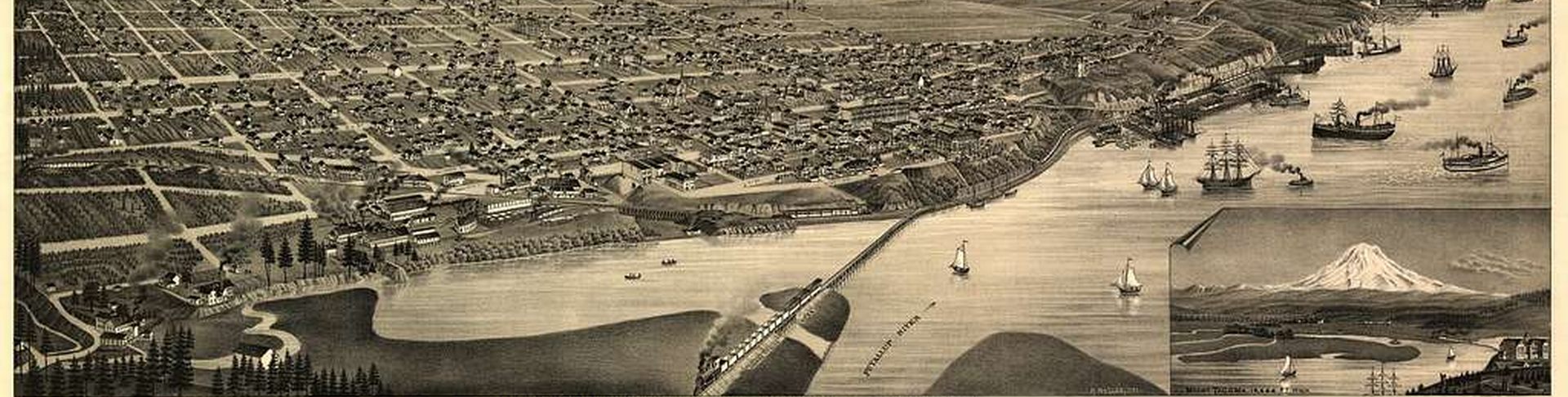
  • Looking Closer: A Guide to Making Bird's-eye Views of National Park Service Cultural and Historical Sites, Tom Patterson
  • From Drawer to Digital: A Statewide Collaboration for Building Digitial Historic Map Collections, Peter Michel, Linda Newman, Katherine Rankin, Vicki Toy-Smith and Glee Willis
  • World Atlas of Epidemic Diseases, Reviewed by Tom Koch
  • Mapping the News: Case Studies in GIS and Journalism, Reviewed by Mary L. Johnson
  • Heber Valley Camp, 1:9,000, Designed by Brandon Plewe

top

Number 51, Spring 2005Number 51, Spring 2005

  • Elements of Cartography: Tracing Fifty Years of Academic Cartography, Judith Tyner
  • Putting "Cartography" into the History of Cartography: Arthur H. Robinson, David Woodward, and the Creation of a Discipline, Matthew H. Edney
  • Arthur Robinson: An Academic Family Tree, Henry Castner
  • Arthur H. Robinson: An Appreciation, Norman J. W. Thrower
  • Arthur H. Robinson: Reflections on the Personage, Joel Morrison
  • Contemplating the Challenges. . .and Some Recollections, George F. McCleary, Jr.
  • Remembering Arthur Robinson, Judy Olson
  • A Lifelong Curiosity About Maps, Karen Severud Cook
  • In Rememberance of David Woodward: Of Mentors and Madison, Jan Mersey
  • David Woodward, An Appreciation, Matthew H. Edney
  • David as Map, Guntram H. Herb
  • In Memory of David Woodward, Scholar and Mentor, Paula Rebert
  • The Robinson XI Projection, Henry Castner
  • Arthur Robinson and the OSS, A Letter from Lawrence Martin, January 5, 1946
  • Arthur Robinson Family Tree, Scott Freundschuh

Number 50, Winter 2005Number 50, Winter 2005

  • In Memory of Bill Loy, Stuart Allan
  • Unusual Display of DEMs, J. Ronald Eyton
  • Miscommunicating With Isoline Preference Maps: Design Principles for Thematic Maps, Daniel R. Montello and M. Violet Gray
  • Large-scale Topographic Web Maps Using Scalable Vector Graphics, Peter Pavlicko and Michael P. Peterson
  • Pre-Press and Technical Support Technician, Mark Loppnow
  • Penn State University Libraries: Building a Literary Map for the Web, Joanne M. Perry
  • Connecting Our World: GIS Web Services, Reviewed by David Broscoe
  • A Railroad Atlas of the United States in 1946: Volume 1: The Mid-Atlantic States, Reviewed by Fritz C. Kessler
  • Cordillera Huayhuash, 1:50,000, Designed by Martin Gamache
  • Unusual Displays of DEMs
  • Large-scale Topographic Web Maps Using Scalable Vector Graphics
  • Pre-Press and Technical Support Technician

Number 49, Fall 2004Number 49, Fall 2004

  • Cartography is Alive (Thank God!), James R. Carter
  • Visualizing Metadata: Design Principles for Thematic Maps, Joshua Comenetz
  • Cartographic Guidelines for Geographically Masking the Locations of Confidential Point Data, Michael Leitner and Andrew Curtis
  • Civil War Topographical Engineering in the Shenandoah, Brooks C. Pearson
  • Working With Your Printer, Michael Burnett
  • Building a Digital Collection of Photos and Maps: Milwaukee Neighborhoods at the University of Wisconsin-Milwaukee Libraries, Krystyna K. Matusiak and Judith T. Kenny
  • Manual of Aerial Survey: Primary Data Acquisition, Reviewed by Daniel G. Cole
  • Community Geography: GIS in Action and Community Geography: GIS in Action Teacher's Guide, Reviewed by Beth Filar Williams
  • University of Maine Recreational Trail Guide, Designed by Michael Hermann and Matthew Cote
  • Athens: 2004 Olympics, Designed by Bruce Daniel and Alex Tait
  • Cartographic Guidelines for Geographically Masking the Locations of Confidential Point Data
  • Civil War Topographical Engineering in the Shenandoah

Number 48, Spring 2004Number 48, Spring 2004

  • Response to "Cartography is Dead (Thank God!)", Tom Koch
  • Indigenous Hawaiian Cartographer: In Search Of Common Ground, Renee Pualani Louis
  • Encroachment by Word, Axis, and Tree: Mapping Techniques from the Colonization of New England, Margaret W. Pearce
  • The Cartographic Heritage of the Lakota Sioux, Julie A. Rice-Rollins
  • Using Valid Value Tables in Geodatabase Design to Define Feature Types, Aileen Buckley
  • The Salton Sea Atlas, Reviewed by Judith A. Tyner
  • Cholera, Chloroform, and the Science of Medicine: A Life of John Snow, Reviewed by Tom Koch
  • Indigenous Hawaiian Cartographer: In Search Of Common Ground

Number 47, Winter 2004Number 47, Winter 2004

  • Mapping September 11, 2001: Cartographic Narrative in the Print Media, Robert R. Churchill and Suzanne J. Slarsky
  • Hal Shelton Revisted: Designing and Producing Natural-Color Maps with Satellite Land Cover Data, Tom Patterson and Nathaniel Vaughn Kelso
  • Small Type, Screens and Color in a Postscript Offset Printing Environment, Nat Case
  • The Man Who Flattened the Earth: Maupertuis and the Sciences in the Enlightenment, Reviewed by Judith A. Tyner
  • Cataloging Sheet Maps, the Basics, Reviewed by Christopher H. Mixon
  • Cartography 2003
  • Mapping September 11, 2001: Cartographic Narrative in the Print Media,
  • Hal Shelton Revisted: Designing and Producing Natural-Color Maps with Satellite Land Cover Data
  • Small Type, Screens and Color in a Postscript Offset Printing Environment

top

Number 46, Fall 2003Number 46, Fall 2003

  • Barrington Atlas of the Greek and Roman World: the Cartographic Fundamentals in Retrospect, Richard J.A. Talbert
  • Marianne Moore's "Sea Unicorns and Land Unicorns": The "Unreal realities" of Early Modern Maps and Animals, Adele J. Haft
  • Changing Faces, Changing Places: Mapping Southern Californians, Reviewed by Judith Tyner
  • Representations of Space and Time, Reviewed by Matt McGranaghan
  • Barrington Atlas of the Greek and Roman World: the Cartographic Fundamentals in Retrospect
  • Marianne Moore's "Sea Unicorns and Land Unicorns": The "Unreal realities" of Early Modern Maps and Animals

Number 45, Spring 2003Number 45, Spring 2003

  • Cartography is Dead (Thank God!), Denis Wood
  • Cartographic Design: Rhetoric and Persuasion, Mark Denil
  • World Views: Maps & Art, Reviewed by Jim Ketchum
  • Maps of Medieval Thought. The Hereford Paradigm., Reviewed by Karen Trifonoff
  • Raster data in multimedia atlases: benefits and challenges. Examples from the "Atlas of Switzerland  interactive", Marianne Ruegsegger, Christoph Schmid and René Sieber
  • Cartographic Design: Rhetoric and Persuasion
  • Raster data in multimedia atlases: benefits and challenges. Examples from the "Atlas of Switzerland  interactive"

Number 44, Winter 2003Number 44, Winter 2003

  • The Atlas of Canada Web Mapping: The User Counts, Donna Williams, Douglas O'Brien, Eric Kramers
  • Moving the Atlas of Saskatchewan from a Hardcopy (Millennium Edition) to a Multi-Media (CD-ROM Edition) Platform, Lawrence Martz, Elise Pietroniro
  • State Atlas Design, James E. Meacham, Stuart Allan
  • Design Guidelines for Digital Atlases, Amy K. Lobben, David K. Patton
  • Tips for Designing Effective Animated Maps, Mark Harrower
  • Erikson, Eskimos, and Columbus: Medieval European Knowledge of America, Reviewed by Russell S. Kirby
  • Maps of The Queens Jazz Trail, The Harlem Renaissance, and The East Village, Reviewed by Matt Knutzen
  • Spying With Maps: Surveillance Technologies and the Future of PrivacyReviewed by Barbara P. Buttenfield, Vanessa Bauman, R.J. Kern
  • Moving the Atlas of Saskatchewan from a Hardcopy (Millennium Edition) to a Multi-Media (CD-ROM Edition) Platform
  • State Atlas Design
  • Tips for Designing Effective Animated Maps

Number 43, Fall 2002Number 43, Fall 2002

  • Earle Birney's "Mappemounde": Visualizing Poetry With Maps, Adele J. Haft
  • Hillshading With Oriented Halftones, Patrick J. Kennelly
  • Getting Real: Reflecting on the New Look of National Park Service Maps, Tom Patterson
  • Atlas of Oregon, Second Edition, Reviewed by Joseph Stoll
  • Atlas of Oregon CD-ROM, Reviewed by Joseph Stoll
  • The Map that Changed the World: William Smith and the Birth of Modern Geology, Reviewed by Brenden E. McNeil
  • Earle Birney's "Mappemounde": Visualizing Poetry With Maps
  • Getting Real: Reflecting on the New Look of National Park Service Maps

Number 42, Spring 2002Number 42, Spring 2002

  • Using ArcMap to Enhance Topographic Presentation, David Barnes
  • Photoshop 6 Tutorial: How to Create Basic Colored Shaded Relief, Alex Tait
  • Bryce 5 Tutorial: How to Drape a Satellite Image Onto a DEM, Tom Patterson
  • Afghanistan Maps, Richard Furno
  • MAPublisher  Little Known Tips and Tricks, Ted Florence
  • The Perfect Cartography Software, and How We Live Without It, Brandon Plewe
  • The Design of Globe Gores, Daan Strebe
  • CUAC MINUTES, Submitted by Dan Seldin

top

Number 41, Winter 2002Number 41, Winter 2002

  • Thinking Philosophically in Cartography: Toward A Critical Politics in Mapping, Jeremy W. Crampton
  • Frank H. Galbraith's Railway Mail Service Maps, 1897, Virginia W. Mason
  • Participatory Mapping of Disabled Access, Rob Kitchin
  • The Cambridge Star Atlas, Reviewed by Edith Punt
  • The Map Library in the New Millennium, Reviewed by Joanne M. Perry
  • The Ohio State University Libraries Map Room, Steve Rogers
  • Digital Map and Geospatial Information Center Princeton University Library, Tsering Wangyal Shawa
  • Map and Geographic Information Center Centennial Science and Engineering Library University of New Mexico, Mary Wyant

Number 40, Fall 2001Number 40, Fall 2001

  • The Future Is Now: a Map Librarian's Response to "The Map Library's Future", Scott R. McEathron
  • The Map Library's Future Revisited: A Response, C. Peter Keller
  • Mapping Ethnicity: Color Use in Depicting Ethnic Distribution, Jenny Marie Johnson
  • Henry Reed's Poetic Map of Verona: (Di)versifying the Teaching of Geography, IV, Adele J. Haft
  • Mapping for the Internet with Macromedia Director, Nathaniel Vaughn Kelso
  • The Grammar of Graphics, Reviewed by Russell S. Kirby
  • The New Nature of Maps: Essays in the History of Cartography, Reviewed by Mark Monmonier

Number 39, Spring 2001Number 39, Spring 2001

  • The Map Library's Emerging Role in the Dissemination of Cartographic Information on the Internet, Patrick McGlamery and Robert G. Cromley
  • Feeling It Out: The Use of Haptic Visualization for Exploratory Geographic Analysis, Amy L. Griffin
  • Visualizing Change: Using Cartographic Animation to Explore Remotely-Sensed Data, Mark Harrower
  • Creating TrueType Fonts For Use As Symbols in ArcGis®, Jaynya W. Richards
  • Online Mapping and Critical GIS, Jeremy W. Crampton
  • University of Colorado at Boulder Map Library, Elisabeth Filar Williams
  • The Huxley Map Library at Western Washington University, Janet R. Collins
  • The Map Collection at the University at Stony Brook, David Y. Allen
  • GIS and Health, Reviewed by Russell S. Kirby
  • The Island of Lost Maps: A True Story of Cartographic Crime, Reviewed by Judith A. Tyner

Number 38, Winter 2001Number 38, Winter 2001

  • Whither Cartography?, Judith A. Tyner
  • How The Monosemic Graphics Go Polysemic, Jan Ketil Rod
  • Visualizing Data Certainty: A Case Study Using Graduated Circle Maps, Laura D. Edwards and Elisabeth S. Nelson
  • The Poet As Map-Maker: The Cartographic Inspiration and Influence of Elizabeth Bishop's "The Map", Adele J. Haft
  • Physical Terrain Modeling for Geographic Visualization, Douglas R. Caldwell
  • The Map Library's Future, C. Peter Keller
  • Cyber Rights and Cyber Maps, Jeremy Crampton
  • Geographic Information Systems, An Introduction by Tor Bernhardsen, Reviewed by Gordon Kennedy

Number 37, Fall 2000Number 37, Fall 2000

  • Cartography, Digital Transitions, and Questions of History, John Pickles
  • Business, Governments and Technology: Inter-linked Causal Factors of Change in Cartography, David Rhind
  • Internet Maps in the Context of Community Right-to-Know versus Public Safety, Rex G. Cammack and Lindsay Svadbik
  • Use and Users of Maps on the Web, Corné P.J.M. van Elzakker
  • Webcams, Interactive Index Maps, and Our Brave New World's Brave New Globe, Mark Monmonier
  • A New Technology for Interactive Online Mapping with Vector Markup and XML, Ilya Zaslavsky
  • Desktop Hachure Maps from Digital Elevation Models, Patrick J. Kennelly and A. Jon Kimerling
  • Estimating the Size of a Large Map Collection or How I "Lost" 200,000 Maps and Still Kept My Job, John Anderson
  • The Bodeleian Library, Oxford, United Kingdom, Nick Millea
  • World Directory of Map Libraries

top

Number 36, Spring 2000Number 36, Spring 2000

  • Cartographic Futures On A Digital Earth, Michael F. Goodchild
  • The Nature of Creativity in Cartographic Design with Special Reference to the Barbara Petchenik Map Design Competition, Henry W. Castner
  • A Case for Teaching Geographic Visualization without GIS, Anne Kelly Knowles
  • A View From On High: Heinrich Berann's Panoramas and Landscape Visualization Techniques for the U.S. National Park Service, Tom Patterson
  • Poems Shaped Like Maps: (Di)Versifying the Teaching of Geography, II, Adele J. Haft
  • The Osher Map Library and Smith Center for Cartographic Education, Yolanda Theunissen and Matthew Edney
  • Charting Neptune's Realm: From Classical Mythology to Satellite Imagery
  • Using Remote Sensing Imagery to Texturize Layer Tinted Relief, Jeffrey S. Nighbert

Number 35, Winter 2000Number 35, Winter 2000

  • History of Mapping and Map Use in the Twentieth Century: An Invitation, Mark Monmonier
  • The Limits of Possibility: Rand McNally in American Culture, 1898-1929, Susan Schulten
  • Private Journeys on Public Maps: A Look at Inscribed Road Maps, James R. Akerman
  • A History of Distributed Mapping, Jeremy W. Crampton
  • Anatomy of a Cartographic Surrogate: the Portrayal of Complex Electoral Boundaries in the Congressional District Atlas, Mark Monmonier

Number 34, Fall 1999Number 34, Fall 1999

  • Maps on Stone: The Web and Ethics in Cartography, Michael P. Peterson
  • Maps and Political Power: A Cultural Interpretation of the Maps in The Gazetteer of Jiankang Prefecture, Bangbo Hu
  • Spatial Concept Lattices: An Integration Method in Model Generalization, Margarita Kokla and Marinos Kavouras
  • UO Campus Mapping Program: Integrating CAD, GIS, and Map Publishing, James E. Meacham and Andrea C. Ball
  • Critical Success Factors when Publishing Internet Mapping Services, Kirk Mitchell
  • Building an Atlas of Cyberspace, Martin Dodge

Number 33, Spring 1999Number 33, Spring 1999

  • The American School Atlas: 1784 - 1900, Jeffrey C, Patton
  • The Poet and the Map: (Di)versifying the Teaching of Geography, Adele J. Haft
  • Creativity, Art and Cartography in Geographic Education, Karen M. Trifonoff
  • Designing Dynamic Maps, Nicholas Springer
  • Map Design Enhancement for Terrain Visualization by Army Aviators, Nicholas Springer
  • World Wide Web Mapping and GIS: An Application for Public Participation, John Krygier

Number 32, Winter 1999Number 32, Winter 1999

  • The Web, Cartography and Trust 3, Matthew McGranaghan
  • Using Selective Attention Theory to Design Bivariate Point Symbols, Elisabeth S. Nelson
  • Water Quality Mapping for Water Management, Sébastien Caquard
  • Problems of Cartographic Design in Geographic Information Systems for Transportation, R. Gordon Kennedy
  • Envisioning the City: Six Studies in Urban Cartography, Marsha L. Selmer
  • Visual Explanations: Images and Quantities, Evidence and Narrative, Russell S. Kirby
  • Creation of Publication Quality Shaded-Relief Maps with ArcView GIS, David Barnes

Number 31, Fall 1998Number 31, Fall 1998

  • Content Analysis, Semiotics, and Social Semiotics for Cartography Analysis: Interpreting Geospatial Representations, Myke Gluck
  • Teaching and Learning Focus Group Skills: A Classroom Example Evaluating Map Design, Judy M. Olson, et al.
  • QSR NUD*IST and ATLAS/ti, Jodi Vender and Trudy Suchan
  • Cartographic Encounters: Perspectives on Native American Mapmaking and Map Use, Jovanka R. Ristic
  • Flattening the Earth, Two Thousand Years of Map Projections, Zehdreh Allen-Lafayette
  • Maps and Politics, Valerie Krejcie
  • Maps.com: Solving the Base Map Problem Online, Bill Spicer

Number 30, Spring 1998Number 30, Spring 1998 (40.7MB)

  • The Convergence of Spatial Technologies, Jeremy Crampton
  • Anatomy of the Introductory Cartography Course Revisited, James F. Fryman and Bonnie R. Sines
  • About the Quality of Maps, Georg Gartner
  • Using Flow Maps to Visualize Time-Series Data: Comparing the Effectiveness of a Paper Map Series, a Computer Map, Harry Johnson and Elisabeth S. Nelson
  • The Convergence of Spatial Technologies, Jeremy Crampton
  • Anatomy of the Introductory Cartography Course Revisited, James F. Fryman and Bonnie R. Sines
  • About the Quality of Maps, Georg Gartner
  • Using Flow Maps to Visualize Time-Series Data: Comparing the Effectiveness of a Paper Map Series, a Computer Map, Harry Johnson and Elisabeth S. Nelson

top

Number 29, Winter 1998Number 29, Winter 1998 (34.8MB)

  • That Interactive Thing You Do, Michael P. Peterson
  • Beyond Graduated Circles: Varied Point Symbols for Representing Quantitative Data on Maps, Cynthia A. Brewer and Andrew J. Campbell
  • Animation-Based Map Design: The Visual Effects of Interpolation on the Appearance of Three-Dimensional Surfaces, Stephen Lavin, Sonja Rossum, and Shawn R. Slade
  • Decision-Making with Conflicting Cartographic Information: The Case of Groundwater Vulnerability Maps, Charles P. Rader and James D. Janke

Number 28, Fall 1997Number 28, Fall 1997 (24.4MB)

  • Use of Tactile Maps by Blind and Visually Impaired People, Simon Ungar, Angeles Espinosa Bayal, Mark Blades, Espernaza Ochaita, and Christopher Spencer
  • Regional Recognition and Delimitation from Topographic Maps: User Strategies, Christopher Board
  • Map Use Steps and Their Data Quality Requirements, Ferjan Ormeling
  • Map Use - Perspectives in Geographic Undergraduate Education, Derek Thompson
  • User Interface Studies in the Virtual Map Environment, Jeffrey S. Torguson

Number 27, Spring 1997Number 27, Spring 1997 (26MB)

  • Introductory Comments on Information Theory and Cartography, Waldo Tobler
  • John Sherman and the Origins of GIS, Nicholas Chrisman
  • John Clinton Sherman: Academic Cartographer on the Brink of a New Age, Everett A. Wingert
  • Talking in the Tree House: Communication and Representation in Cartography, Barbara P. Buttenfield

Number 26, Winter 1997Number 26, Winter 1997 (33.2MB)

  • Carotgraphy and the Internet: Introduction and Research Agenda, Michael P. Peterson
  • Geographic Information Retrieval and the World Wide Web: A Match Made in Electronic Space, David Johnson and Myke Gluck
  • Cartography on the Internet: Thoughts and a Preliminary User Survey, Mark Harrower, C. Peter Keller and Diana Hocking
  • Life and Lectures: The Internet as a Resource for a Senior Undergraduate GIS Course, Janet E. Mersey

Number 25, Fall 1996Number 25, Fall 1996 (28MB)

  • Males, Females, and Maps: Evaluating Spatial Encoding Strategies, Elisabeth S. Nelson
  • Adjusting and Separating Map Colors Using Photoshop, Judy M. Olson

Number 24, Spring 1996Number 24, Spring 1996 (25.4MB)

  • Maps, text, and Seventh-graders: a Study of Spatial Learning, Alisa D. Ramirez & Patricia Gilmartin
  • Copyright and Cartographic Multimedia, Trudy Suchan

top

Number 23, Winter 1996Number 23, Winter 1996 (22.5MB)

  • Edge Pixels: the Effect of Scanning Resolution, P. Andrew Ray
  • The Production of Smooth Scale Changes in an Animated Map Project, Martin von Wyss

Number 22, Fall 1995Number 22, Fall 1995 (24.7MB)

  • Cartography Resources on the World Wide Web, Jeremy Crampton

Number 21, Spring 1996Number 21, Spring 1995 (37MB)

  • The Benefits of Verbal and Spatial Tasks in Contour Map Learning, Margaret Lanca and John R. Kirby
  • Map Libraries in Transition: Conference Opening Remarks, Christopher Baruth
  • The Future of Digital Data in Map Collections: One Perspective, Colleen Beard
  • Disenfranchisement: Paranoia or Possibilities, Debra D. Lords
  • Building the Virtual Map Library: Some Concerns and Considerations, Patrick McGlamery
  • Transition in the World of Map Librarians, Gary W. North
  • Source Error in a Map Series, or Science as a Socially Negotiated Enterprise, Peter Gould
  • Planning for GIS in Libraries: Decisions, Choices, and Opportunities, Linda R. Zellmer
  • What You'll Need to Know to use GIS in 2001, Ronald F. Abler

Number 20, Winter 1995Number 20, Winter 1995 (37MB)

  • Forward for Featured Articles, Timothy Trainor
  • Current Trends in Electronic Atlas Production, Bengt Rystedt
  • New Forms, Concepts, and Structures for European National Atlases, Ferjan Ormeling
  • Visualizing Digital Atlas Information Products and the User Perspective, C. Peter Keller
  • The Potential of Electronic Atlases for Geographic Education, Ute J. Dymon
  • An Electronic Atlas Authoring System, Richard M. Smith and Thomas Parker
  • A Personalized National Atlas of the United States, Joel L. Morrison

Number 19, Fall 1994Number 19, Fall 1994 (35.9MB)

  • Designing Animated Maps for a Multimedia Encyclopedia, David DiBiase
  • Proactive Graphics For Exploratory Visualization of Biogeographical Data, Barbara P. Buttenfield and Christopher R. Weber
  • The Armchair Traveler Plugs In: Multimedia Cartography as a Visual Supplement to Travel Writing, Shannon Des Roches
  • Using High-resolution Digital Scans in Multimedia Cartographic Applications, David W. Tilton
  • Creating Interactive Media on CD-ROM, Sona Karentz Andrews

top

Number 18, Spring 1994Number 18, Spring 1994 (25.6MB)

  • Thematic Mapping with Illustration Software: Unraveling the Mystery of Graphic File Formats, Brian Morber and Janet E. Mersey
  • Culture of the Wisconsin Official State Highway Map, Mark H. Bockenhauer

Number 17, Winter 1994Number 17, Winter 1994 (28.8MB)

  • How Practical Are Minimum-error Map Projections, John P. Snyder
  • Reexamining the Role of Maps in Geographic Education: Images, Analysis, and Evaluation, James E. Young

Number 16, Fall 1993Number 16, Fall 1993 (19.9MB)

  • Relating Cognitive Development to Cartographic Education with a Model of Orientation Space, Henry W. Castner
  • The Development of Children's Spatial Knowledge: Implications for Geographical Education, Jodie M. Plumert

Number 15, Spring 1993Number 15, Spring 1993 (24.6MB)

  • A Cartographic Quincentenary, Arthur H. Robinson
  • Desktop Map Design: Some Odysseys of Form and Flow, Kevin Byrne

Number 14, Winter 1993Number 14, Winter 1993 (20.5MB)

  • The Impact of the Implementation of the North American Datum of 1983 (NAD 83) on Aeronautical Navigation in the United States, Ronald M. Bolton
  • Maritime Boundaries on National Ocean Service Charts, Charles E. Harrington

top

Number 13, Fall 1992Number 13, Fall 1992 (21.3MB)

  • Cartographic Animation: Potential and Research Issues, Doris Karl
  • Visualizing Uncertain Information, Alan M. MacEachren

Number 12, Winter 1993Number 12, Spring 1992 (22MB)

  • Theory into Practice: A Tribute to Brian Harley, Jeremy Crampton
  • Creating Unclassed Choropleth Maps with PostScript, Micheal P. Peterson
  • Interactive Color: A Guide For Color in Computer Graphics, Cynthia A. Brewer
  • Michelin's Central Washington DC Street Map, Sally S. Summerall

Number 11, Fall 1991Number 11, Fall 1991 (19.3MB)

  • A Content Analysis and Comparison of Three Cartographic Journals: 1964-1989, Patricia Gilmartin

Number 10, Summer 1991Number 10, Summer 1991 (7.5MB)

  • Ethics and Map Design. Six Strategies for Confronting the Traditional One-map Solution, Mark Monmonier
  • Can There Be a Cartographic Ethics, J.B. Harley
  • Two Mapping Software Packages for Macintosh Computers, Gene Turner
  • A New HyperCard Stack for Digital Cartography, Jeremy Crampton

Number 09, Spring 1991Number 09, Spring 1991 (26.5MB)

  • Computer-aided Mapping for Facilities Management and Environmental Compliance, Diane C. Drigot, Margaret E. Elliot and Karen L. Glyn
  • The Ideas of Nu Cartoman, Micheal P. Peterson
  • Manipulating MapMaker Maps in FreeHand 3.0, David DiBiase
  • Wurman, Richard Saul (1989) Hats, Jeffrey C. Patton
  • Network Resources for Map People, Jeremy Crampton
  • The Availability of International Topogrraphic Maps, Russell E. Guy
  • Taylor, D.R.F. (1991) Geographic Information Systems: The Microcomputer and Modern Cartography, John B. Krygier

top

Number 08, Winter 1990-91Number 08, Winter 1990-91 (7.8MB)

  • Anatomy of the Introductory Cartography Course, James F. Fryman and Bonnie R. Sines
  • Sample Cartography Lab Statement, William G. Loy
  • Mandel, Robert (1990) The World According to Micros, Will Fontanez
  • Kenji Kimura; and others (1990) CRT Display Visibilility in Automobiles, Matthew McGranaghan
  • Mapping the Nation's Physiography by Computer, Richard J. Pike and Gail P. Thelin
  • Campbell, John (1991) Map Use and Analysis, Richard J. Pike and Gail P. Thelin
  • An Elusive Reference: the 1:1 Map Story, Jeremy Crampton

Number 07, Fall 1990Number 07, Fall 1990 (8.6MB)

  • Ethical Problems in Cartography  A Roundtable Commentary, Patrick McHaffle, Michael Dobson, Sona Karentz Andrews and two anonymous employees of a federal mapping agency
  • Introduction to Macintosh Graphics File Formats, David DiBiase
  • Buchanan, Rex and Don Steeples (1990) On-demand Map Publication, Terry A. Slocum

Number 06, Summer 1990-91Number 06, Summer 1990 (8MB)

  • Maps in Children's Literature, Jeffrey C. Patton and Nancy B. Ryckman
  • Imagesetting in Desktop Mapping, Mark Mattson

Number 05, Spring 1990Number 05, Spring 1990 (9.4MB)

  • Choosing Tools: Nine Metaphors of Four-Dimensional Cartography, Philip J. Gersmehl
  • Software Review, Robert P. Sechrist and Anne Gibson
  • Academic Cartography Labs in the U.S. and Canada: A Survey, Roy Doyon and Anne Gibson
  • University Staff Cartographers and Cartographic Laboratories, Ellen R. White

Number 04, Winter 1989-90Number 04, Winter 1989-90 (8.8MB)

  • Color Chart Use in Map Design, Cynthia A. Brewer
  • Software Review, Systat. Mark Leitzell & Alan MacEachren
  • The Placement of Points in Freehand Paths, David DiBiase & Kevin Kolb

Number 03, Fall 1989Number 03, Fall 1989 (6.8MB)

  • Desktop Mapping at Temple University, Mark Mattson
  • Cartography at the University of Toronto, G.J. Matthews

Number 02, Summer 1989Number 02, Summer 1989 (7.7MB)

  • The Librarian's Dilemma: A Map Librarian's Access to Machine-Readable Information, Patrick McGlamery
  • Software Review: PC-Globe+ and Elctromap, Sona K. Andrews
  • The Best of Both Worlds, Iden Rosenthal

Number 01, March 1989Number 01, March 1989 (31.1MB)

  • "Automated Radar Video Map Production at NOS", Ronald M. Bolton & Russel A. Hoover


Cartographic Perspectives


Editor: Fritz Kessler

fkessler@frostburg.edu

Department of Geography
Frostburg State University
Frostburg, MD, 21531, USA
phone  (301) 876-0198    
fax  (301) 687-4495


Join NACIS to start receiving Cartographic Perspectives now!


CP64 - Fall 2009 - Special Digital Issue

CP64

This special digital issue of Cartographic Perspectives is available as a FREE DOWNLOAD here.


Cover Art for CP


CP 54


For the past 4 years, the cover of Cartographic Perspectives has been graced by the "carto-art"of Matt Knutzen.  Matt is the Assistant Chief of the Map Division at the New York Public Library (NYPL).  Matt holds an MFA from Pratt, and a geography degree from Berkeley.  In his work, Matt combines the best of both worlds: Art + Cartography.  His art playfully and creatively takes the map as artifact and transforms it into pieces that catch the mind's eye.  Matt presented his work at the NYPL in a talk titled: Outside the boundary: A presentation of map artworks by Matthew A. Knutzen.


CP Commemorative Issue - Celebrating 25 Years of NACIS


The Cartographic Perspectives Commemorative Issue celebrates the 25th anniversary of NACIS. In this special issue four past editors of CP reflect on their tenure as editor and their favorite articles - a insightful history of Cartographic Perspectives. The cover features the past 51 cover designs and a map to the last 25 NACIS meeting locations. We have a limited number of these issues left for purchase ($15 US/$20 international). If you are interested please contact Jim Anderson by e-mail. Checks made payable to NACIS can be mailed to:


NACIS - CP
C2200 University Center - FREAC
Florida State University
Tallahassee, FL 32306-2641


Selected CP Covers


CP53
Winter, 2006 Fall, 2004
Winter, 2004 Spring, 2003
Fall, 2002 Fall, 2001


©2001-2005, North American Cartographic Information Society
Address: AGS Library, PO Box 399, Milwaukee, WI 53201
Phone: (414) 229-6282, FAX: (414) 229-3624, E-Mail: business@nacis.org
Report problems to webmaster@nacis.org
